
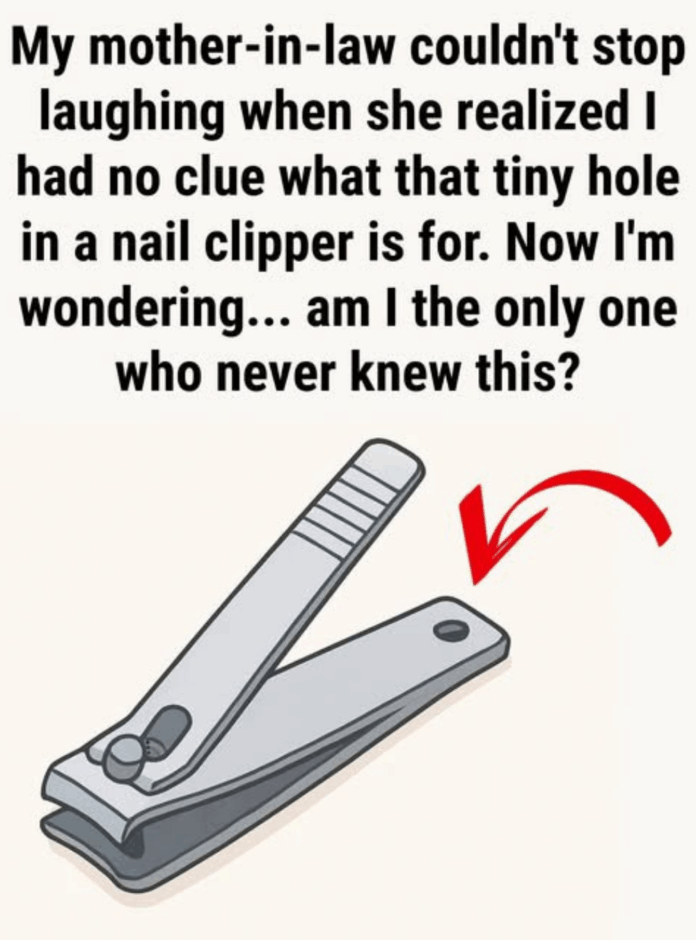

Nail clippers are one of those everyday tools we rarely think about. They live in drawers, toiletry bags, or glove compartments, used briefly and then forgotten. Yet if you look closely, many clippers include a small round hole near the end—a detail most people never question. Far from decorative, that tiny opening is a deliberate design choice that adds unexpected practicality to a simple object.
The most common use for the hole is keychain attachment. Sliding a key ring through it turns a nail clipper into a portable essential that’s hard to misplace. Compared with thin chains or flimsy clips, a solid key ring offers durability and security. With the clipper attached to your keys, it’s always within reach—useful while traveling, at work, or whenever a quick grooming fix is needed on the go.
That small hole can also serve a second, lesser-known function: shaping thin wire. Threading wire through the opening provides extra grip and control, making it easier to bend or adjust precisely without straining your fingers. This can be handy for light household tweaks or small craft projects where finesse matters more than force, and it reduces the risk of slips or minor injuries.
Beyond the hole itself, nail clippers often include other subtle features that boost their usefulness. The attached file can double as a makeshift screwdriver for tiny screws when proper tools aren’t available. Its pointed edge can help open packages or slice tape carefully. Together, these thoughtful details turn a basic grooming item into a compact, everyday multitool.
It’s a reminder that good design often hides in plain sight. Even the most ordinary objects can offer more than meets the eye—once you know what to look for.