
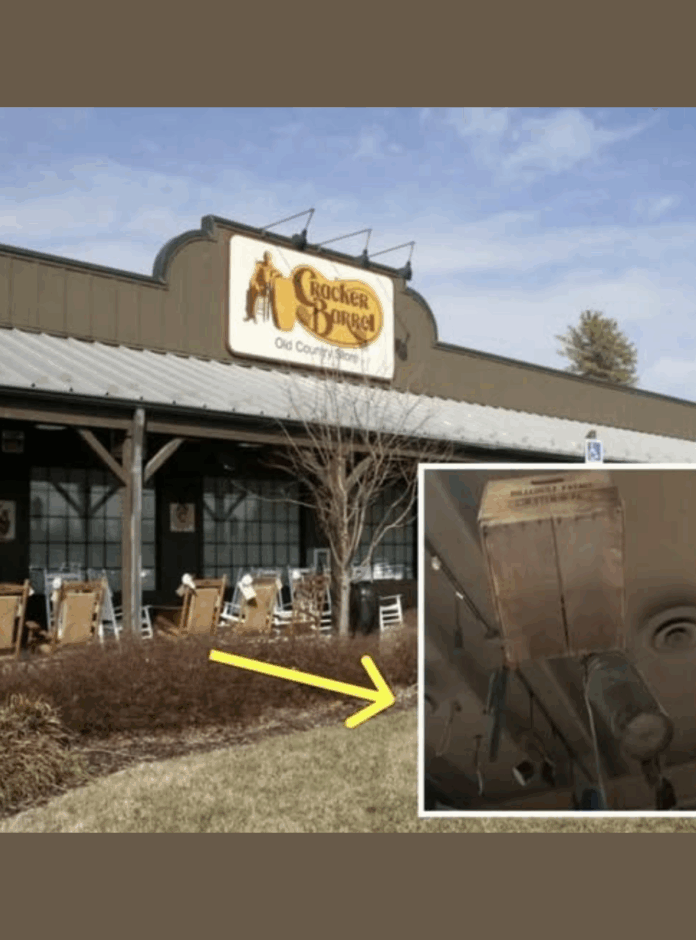

A recent situation at a Connecticut restaurant location drew attention to how decorative elements in public spaces can sometimes be interpreted in unexpected ways. A customer raised concerns after noticing a ceiling-mounted display item that felt visually uncomfortable. The piece was part of a larger collection of vintage tools intended to reflect a traditional, nostalgic aesthetic. After the feedback was shared, the business responded promptly, expressing regret for any discomfort and clarifying that the display was never meant to convey a negative message.
The company explained that the object was an antique tool historically used in earlier decades and included purely for decorative and historical purposes. However, it also acknowledged that context and perception matter. Items designed to represent craftsmanship or history can take on unintended meanings when viewed outside their original use, especially in modern public settings. Recognizing that interpretations can vary was a key part of addressing the concern respectfully.
Once the issue was understood, local management made the decision to remove the item to prevent further misunderstanding. Staff members also engaged in conversations about why the display may have caused unease, using the moment as an opportunity to reflect on how décor choices are received by a diverse range of guests. These discussions reinforced the importance of sensitivity and awareness in shared spaces.
In response, the company reiterated its commitment to creating a welcoming and comfortable environment for everyone. Customer feedback was emphasized as an essential part of shaping the in-store experience, including visual presentation. The situation served as a reminder that regularly reviewing décor can help ensure it aligns with values of respect and inclusion. By listening carefully, communicating openly, and making adjustments when needed, the business demonstrated a focus on responsibility and continuous improvement.