
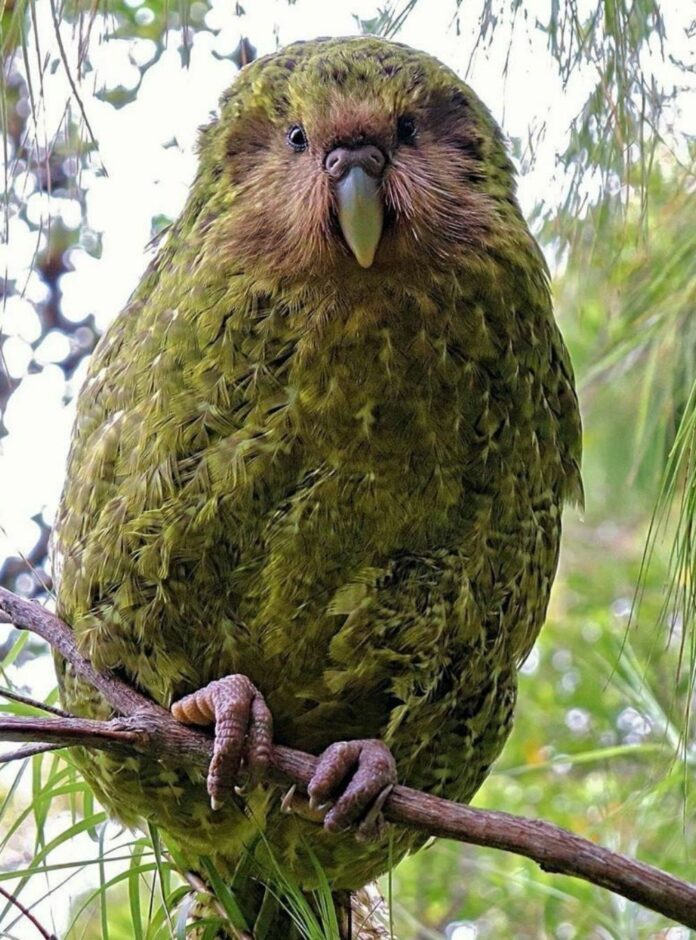

In the mist-covered forests of Aotearoa, where the songs of birds once filled every dawn, one extraordinary creature continues to capture hearts around the world — the kākāpō. With its moss-green feathers, gentle eyes, and endearing waddle, this flightless parrot is unlike any other bird on Earth. Its story is one of tragedy and resilience, a reminder of how fragile — yet how enduring — life can be when met with compassion and care.
The kākāpō (Strigops habroptilus) is a nocturnal parrot found only in New Zealand. It holds a unique place in both science and Māori culture, where it is considered a taonga, a sacred treasure. Revered for its curious nature and soft booming call that once echoed through the valleys, the kākāpō was once widespread across the islands. Sadly, the arrival of humans and introduced predators like rats, cats, and stoats devastated its numbers. By the mid-20th century, the bird that had roamed the forests for centuries was thought to be extinct.
Then, in 1974, hope returned. A small population was discovered on Stewart Island, clinging to survival against all odds. The discovery sparked one of the most ambitious wildlife rescue operations in history. Conservationists, volunteers, and local iwi (tribes) joined forces to save the species from the brink. Each bird was given a name, a home on predator-free sanctuaries, and a team of scientists dedicated to ensuring its future. Today, every living kākāpō is tracked, monitored, and cherished — a testament to what humanity can achieve when it chooses to protect rather than exploit.
Despite these efforts, the kākāpō remains critically endangered. Fewer than 250 individuals are alive today, most living on the remote islands of Whenua Hou (Codfish Island), Pukenui (Anchor Island), and Hauturu-o-Toi (Little Barrier Island). Breeding seasons depend on the availability of rimu fruit, which means that some years bring no chicks at all. Each successful hatchling is a triumph of science and devotion. Teams monitor nests day and night, using technology and instinct to guard against the smallest threats.
But the kākāpō’s story is not one of despair — it is a story of hope. This bird, once silenced, now sings again thanks to the persistence of those who refused to give up. In a world where species vanish at alarming rates, the survival of the kākāpō stands as proof that recovery is possible. It also reminds us that conservation is not just about saving animals; it is about preserving the soul of the planet.
When people see a kākāpō — plump, mossy, and full of quiet dignity — they are reminded that the world is still full of miracles. Its survival is a call to action, urging us to protect the fragile balance of nature before more treasures fade into memory. The kākāpō may walk instead of fly, but it soars in spirit — a symbol of resilience, gratitude, and the extraordinary beauty of life itself.