
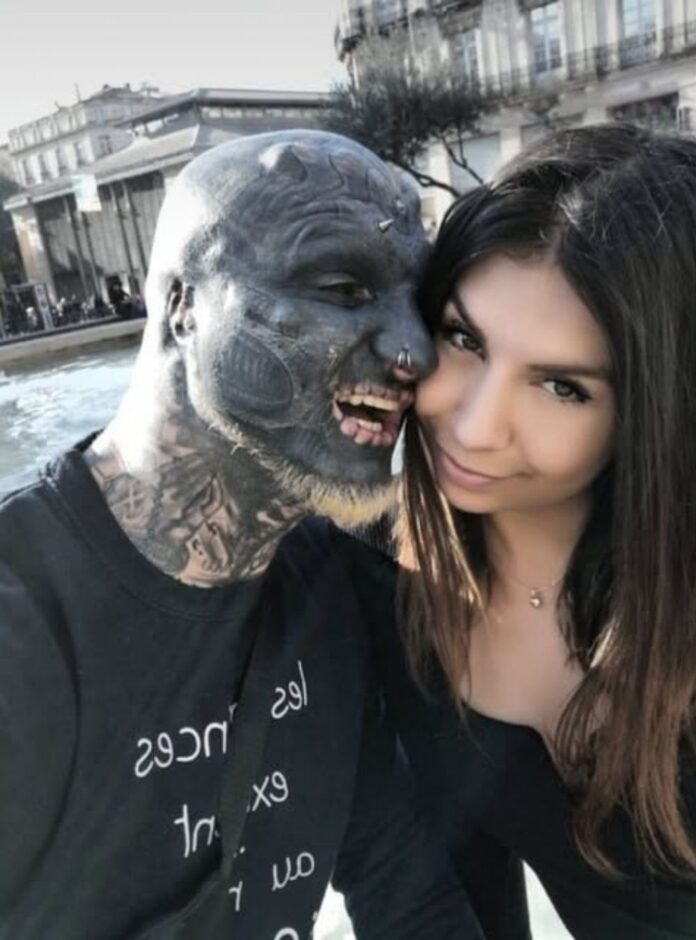

Modern society strongly promotes the idea of personal freedom, especially when it comes to identity and self-expression. Across much of the world, people feel increasingly empowered to explore who they are through clothing, hairstyles, tattoos, piercings, and artistic choices that once faced heavy judgment. What someone wears or how they look is often seen as a reflection of creativity, autonomy, and the right to define oneself on one’s own terms.
Yet acceptance still has boundaries. While many forms of self-expression are now widely embraced, more radical transformations continue to spark discomfort, curiosity, and debate. This tension became especially visible in the case of a 35-year-old man from France whose unconventional appearance drew widespread attention. His look challenged everyday expectations and reportedly led to moments of social friction, from public reactions to difficulties in routine interactions. The response to his transformation revealed that, despite cultural progress, society still struggles when individuality pushes beyond familiar norms.
What many people overlook is that his transformation was not impulsive or driven by shock value. He has described it as a long-term artistic journey, carefully planned and carried out over several years. Each change was intentional, rooted in a personal creative vision rather than a desire to provoke or offend. Some aspects of the transformation required navigating complex legal and medical regulations, which vary from country to country, underscoring how layered and deliberate the process truly was.
As time passed, his personal life continued to evolve alongside his appearance. After an initial period of adjustment, his family reportedly grew more understanding, learning to see beyond the exterior changes. He later entered a supportive relationship with a partner who shared an appreciation for creative expression and individuality. Recent insights suggest that his priorities have shifted away from further physical transformation and toward balance, connection, and everyday life.
His story highlights a deeper question facing modern society: what does real acceptance look like? True tolerance is not just about supporting choices we understand or agree with — it also means respecting personal paths that challenge comfort zones and redefine familiar ideas of identity. In that sense, his journey is less about appearance and more about the ongoing conversation between individuality and collective norms, reminding us that personal transformation can take many forms, each deserving of dignity and respect.