
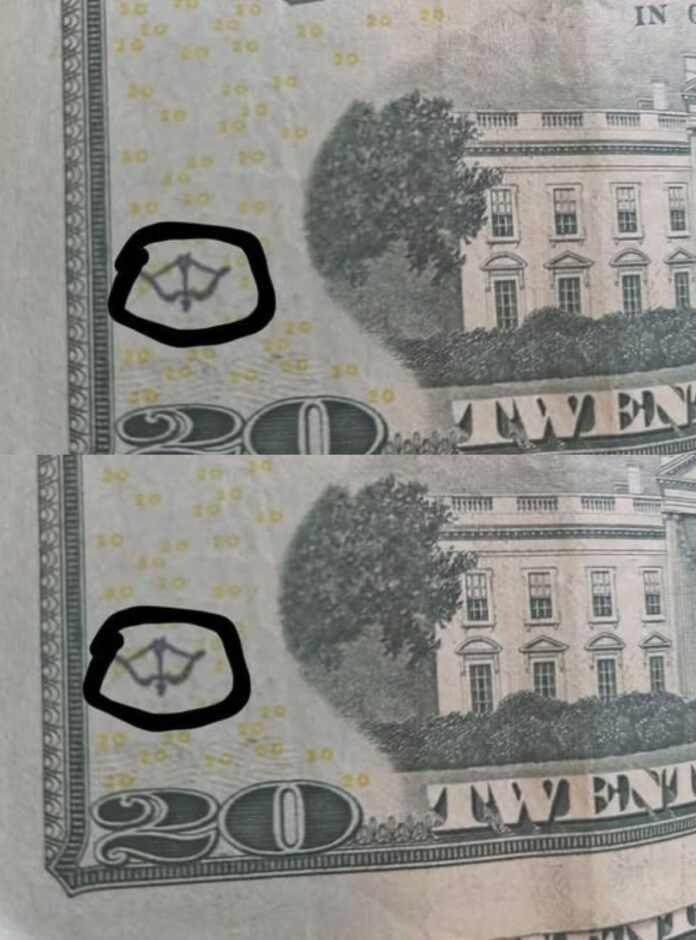

At first glance, a U.S. dollar bill stamped with strange symbols, shapes, or ink markings can seem suspicious. Some people even mistake these signs for damage or defacement. In reality, many of these markings are part of a long-standing global practice that reflects how U.S. currency circulates far beyond American borders.
These markings are commonly known as chop marks. They are not decorative, accidental, or fraudulent. Instead, they are verification stamps applied by currency handlers, traders, or money exchangers to confirm that a bill has been examined and accepted as genuine. Each mark represents a checkpoint in the bill’s journey, often across multiple countries and trading systems.
The historical roots of chop marks
The practice of marking currency dates back centuries, particularly in parts of Asia. In historical trading centers, merchants used stamps to verify the weight and purity of silver coins. Once a coin passed inspection, it was stamped to signal trust and approval. This system reduced the need for repeated testing and helped speed up transactions.
As paper money gradually replaced metal currency, the same principle carried over. Banknotes—especially widely trusted ones like U.S. dollars—were stamped after inspection to indicate authenticity. Over time, this method became embedded in trading cultures across Asia, Africa, and parts of Latin America.
Why U.S. dollars are commonly marked
The U.S. dollar is one of the most widely accepted currencies in the world. In many regions, it is used alongside or even in place of local currency because of its perceived stability and reliability. In areas where advanced verification equipment is limited or inconsistent, physical inspection remains essential.
Chop marks serve as a practical solution. Once a bill is checked and stamped, future handlers can immediately see that it has already been verified. This reduces delays, minimizes disputes, and increases confidence during everyday transactions. Over time, a single bill may accumulate multiple marks, each one telling part of its travel history.
What the symbols mean
The symbols themselves can vary widely. Some look like simple shapes, others resemble arrows, animals, or stylized characters. These are not official government symbols. Instead, they usually represent individual exchangers, businesses, or local verification systems. The placement is typically deliberate and careful, avoiding key areas such as serial numbers, portraits, and security features.
While the markings may appear unusual to someone unfamiliar with the practice, they are generally seen as signs of active circulation rather than damage.
Are chop-marked bills still valid?
In most cases, lightly marked bills remain valid and spendable. Although official guidelines discourage intentional marking of currency, chop marks are widely recognized as part of normal international circulation. However, bills with excessive markings may sometimes be rejected by vending machines, automated systems, or institutions that prefer cleaner notes.
For collectors and curious observers, these marked bills often feel special. They offer a tangible reminder that money is not static—it moves, adapts, and connects people across borders.
A quiet story in your wallet
A stamped or marked dollar bill carries more than monetary value. It carries history. Each symbol is evidence of trust, trade, and human interaction in places far from where the bill was printed. Rather than being flaws, these marks are footprints—proof that currency plays a role in a global story that extends well beyond national boundaries.
So the next time you encounter a U.S. dollar with unfamiliar symbols, you may be holding a small piece of international exchange history—one that traveled, was tested, trusted, and passed along, one transaction at a time.